Novis Peptide News (May 30, 2026): Retatrutide Demand, GLP-1 Access, and the Next Triple-Agonist Race

Novis Peptide News, For the week of May 23 through May 30, 2026, peptide news centered on one major theme: GLP-1 and next-generation obesity drug demand is accelerating, but access, safety, and regulation are becoming harder to ignore.
This week’s biggest peptide-related stories included a major UK seizure of unlicensed weight-loss drugs, CVS Caremark restoring coverage for Zepbound, and Kailera reporting early data for another triple-acting obesity injection. The prior week’s Retatrutide Phase 3 data also continued to shape the conversation, because public interest in next-generation GLP-1 drugs is moving faster than approval, access, and regulation.
The peptide market is no longer just about one drug, one company, or one mechanism. It is becoming a broader race between clinical innovation, insurance coverage, gray-market supply, and patient demand.
UK Authorities Seized Unlicensed Weight-Loss Drugs Including Retatrutide and Tirzepatide
One of the biggest peptide safety stories of the week came from the United Kingdom.
On May 29, The Guardian reported that UK authorities seized a large haul of unlicensed weight-loss drugs during a raid near Northampton. The Medicines and Healthcare products Regulatory Agency, supported by Northamptonshire Police, reportedly found a large-scale operation involved in manufacturing, assembling, and distributing illicit weight-loss drugs.
The seizure reportedly included about 12,000 doses, including Retatrutide, Tirzepatide, and other peptide-based substances.
This story matters because it shows how quickly demand for GLP-1 and next-generation obesity drugs has created a parallel market.
Retatrutide is not FDA-approved or approved for general public use. It remains investigational. Tirzepatide, by contrast, has approved prescription-drug forms, but that does not make unlicensed or counterfeit versions safe. A regulated prescription product and an unlicensed product from an illegal supply chain are not the same thing.
For peptide education, this is one of the clearest examples of why sourcing matters. The danger is not only the compound name. It is also the product identity, sterility, concentration, handling, packaging, and whether the product comes from a regulated medical supply chain.
Why Retatrutide Demand Is Growing Before Approval
Retatrutide continues to be one of the most watched investigational drugs in metabolic medicine.
The reason is the data. The week before this reporting period, Eli Lilly announced Phase 3 TRIUMPH-1 results showing that participants on the 12 mg dose of Retatrutide lost an average of 70.3 pounds, or 28.3% of body weight, over 80 weeks. Lilly also reported that 45.3% of participants on the 12 mg dose achieved at least 30% weight loss. You can read Lilly’s announcement here: Lilly’s triple agonist, retatrutide, delivered powerful weight loss in pivotal Phase 3 obesity trial.
That level of weight loss explains why Retatrutide is becoming a major topic online. But it also explains why gray-market risk is growing.
Retatrutide is a triple hormone receptor agonist. It targets GIP, GLP-1, and glucagon receptors. That makes it different from Semaglutide, which works through GLP-1 receptor activity, and Tirzepatide, which activates GIP and GLP-1 receptors.
The public sees that progression and interprets it as the next step:
Semaglutide started the modern GLP-1 weight-loss wave.
Tirzepatide raised expectations with dual incretin activity.
Retatrutide is now being watched as the triple-agonist candidate that could push the category even further.
The concern is that people may try to access “reta” before approval through unverified sellers. This is where peptide education needs to be very clear: clinical-trial Retatrutide is not the same as an online research vial using the same name.
Reuters Coverage Kept Retatrutide in the News Cycle
Even though the TRIUMPH-1 announcement landed just before this week’s range, it continued shaping the May 23 through May 30 peptide news cycle.
Reuters reported that Lilly’s next-generation obesity drug helped patients lose 28% of body weight in a late-stage trial. Reuters also noted that more than 45% of participants on the highest dose lost at least 30% of their body weight.
That matters because Retatrutide is now being discussed in the same conversation as surgery-level weight loss, next-generation GLP-1 drugs, metabolic disease treatment, and obesity-drug competition.
But the bigger story is not just the number. It is the public response to the number.
The stronger the trial data looks, the more public demand increases. The more demand increases, the more likely it is that unlicensed sellers, counterfeit manufacturers, and gray-market vendors try to capitalize before approval.
That is why the The Guardian’s UK seizure report and Reuters’ retatrutide coverage belong in the same weekly peptide news conversation.
CVS Caremark Bringing Zepbound Back Shows GLP-1 Access Is a Business Story Too
On May 28, Reuters reported that CVS Health would add Eli Lilly’s Zepbound back to some of its drug lists as an additional preferred option for insurance coverage.
Zepbound is the obesity brand name for Tirzepatide, a GIP and GLP-1 receptor agonist.
This story matters because insurance coverage is becoming one of the biggest factors in who can actually access GLP-1 and incretin-based medications.
The GLP-1 market is not only a science story. It is an access story.
Demand is high.
List prices remain expensive.
Employers and health plans are trying to control costs.
Patients want access.
Drugmakers are competing for formulary position.
Pharmacy benefit managers are influencing which medications are easier to obtain.
For peptide news, this is important because the next phase of GLP-1 medicine will not only be determined in clinical trials. It will also be determined by insurance coverage, employer plans, pharmacy benefit managers, affordability, and patient access.
Why Tirzepatide Still Matters in the Retatrutide Era
Retatrutide is getting attention because it is investigational and appears powerful in trials. But Tirzepatide remains one of the most important drugs in the current market because it is already part of approved medical care.
Tirzepatide activates both GIP and GLP-1 receptors. That dual mechanism helped push the market beyond the original GLP-1-only conversation. It also set the stage for public interest in triple agonists like Retatrutide.
The CVS Caremark decision shows that Tirzepatide is still central to the access conversation. Even as the market talks about what may come next, the drugs that are currently approved and covered are the ones patients can actually access through regulated medical channels.
This is a useful reminder: the most exciting drug is not always the most relevant drug today. Regulatory status and access matter.
Kailera Reported Early Data for Another Triple-Acting Obesity Shot
Another important story this week came from Kailera Therapeutics.
On May 27, BioPharma Dive reported that Kailera’s triple-acting obesity injection showed promise in an early Phase 1 dosing trial conducted in China by Hengrui Pharmaceuticals. The report said the triple-acting shot produced double-digit weight loss over 12 weeks in the early trial.
This story matters because Retatrutide is not the only triple-acting obesity drug story anymore. The broader industry is moving toward multi-pathway metabolic drugs.
That means the next generation of obesity medicine may not be defined only by GLP-1. It may include combinations of GLP-1, GIP, glucagon, amylin, and other metabolic pathways.
The key phrase for this era is not just “weight loss.” It is metabolic pathway design.
The Triple-Agonist Race Is Getting Bigger
The obesity drug race is shifting from single-pathway drugs to combination and multi-receptor approaches.
Semaglutide showed the power of GLP-1.
Tirzepatide showed the potential of GIP plus GLP-1.
Retatrutide is pushing attention toward GIP, GLP-1, and glucagon.
Kailera’s early triple-acting data shows that other companies are also building around the same larger idea: more complete metabolic signaling.
But more pathways also means more complexity. Adding receptor activity may improve weight-loss effects, but it can also change tolerability, side-effect patterns, dosing strategy, and long-term monitoring needs.
That is why the future of peptide-based obesity medicine will not only be about stronger results. It will also be about safety, adherence, access, affordability, and whether patients can stay on treatment long enough to benefit.
The Gray-Market Problem Is Now Part of Every Peptide News Cycle
The UK seizure story shows that gray-market peptide supply is becoming a major public health issue.
This problem is not limited to one country. Demand for GLP-1s and next-generation obesity drugs has created a global market for unlicensed products, counterfeit products, and research-labeled compounds.
The problem is especially serious with injectable products. Injectable drugs require sterility, accurate concentration, proper handling, safe packaging, and reliable sourcing. A peptide name on a vial does not prove what is inside.
This is why peptide education needs to keep repeating a simple point:
A clinical trial compound, an FDA-approved prescription drug, a compounded pharmacy product, and a research-use online vial are not the same thing.
They may use similar names. They may be discussed in the same online communities. But the risk level, regulatory status, manufacturing standards, and medical oversight can be completely different.
The FDA has also published safety concerns about unapproved GLP-1 drugs used for weight loss, including products involving Semaglutide, Tirzepatide, and Retatrutide. You can read the FDA’s page here: FDA’s Concerns with Unapproved GLP-1 Drugs Used for Weight Loss.
What This Week Means for Peptide Research Content
The May 23 to May 30 news cycle gives peptide educators several important themes to cover.
First, Retatrutide demand is becoming a safety story, not just a weight-loss story.
Second, Tirzepatide access is still a major issue, even as newer drugs get attention.
Third, triple-agonist obesity drugs are becoming a broader category, not just a single-company story.
Fourth, the gray market is growing because public demand is moving faster than approval and access.
Fifth, credible peptide content needs to explain the difference between approved, investigational, compounded, and unlicensed products.
That last point may be the most important. The public is interested in peptides, but interest without context creates risk.
The Big Takeaway
This week’s peptide news showed both sides of the modern peptide boom.
On one side, legitimate clinical research is moving fast. Retatrutide has pushed the conversation toward triple-agonist obesity treatment. Kailera’s early data suggests more companies are entering the multi-pathway metabolic drug race. Tirzepatide remains central to real-world access as payers and pharmacy benefit managers adjust coverage.
On the other side, unlicensed and gray-market peptide products are spreading because demand is moving faster than regulation. The UK seizure involving Retatrutide, Tirzepatide, and other peptide-based substances shows how quickly the market can become risky when unapproved products move outside regulated channels.
The future of peptide medicine may be powerful, but this week made one thing clear: the next phase has to be built on evidence, quality control, medical oversight, and responsible access.
Outbound Links
The Guardian: Huge Haul of Weight-Loss Drugs Seized on Northampton Country Estate
Use this source for the UK seizure involving unlicensed weight-loss drugs, including Retatrutide, Tirzepatide, and other peptide-based substances.
Reuters: CVS Brings Back Coverage for Lilly’s Obesity Drug Zepbound
Use this source for the CVS Caremark formulary update involving Zepbound, the obesity brand of Tirzepatide.
BioPharma Dive: Kailera’s Three-Pronged Obesity Shot Shows Promise in Early Trial
Use this source for the May 27 report on another triple-acting obesity injection.
Reuters: Lilly Says Next-Gen Obesity Drug Helps Patients Lose 28% of Body Weight
Use this source for context on Retatrutide Phase 3 obesity results that continued shaping the May 23 to May 30 news cycle.
Eli Lilly: Retatrutide Phase 3 TRIUMPH-1 Results
Use this source for the official Phase 3 Retatrutide trial announcement.
FDA: Concerns With Unapproved GLP-1 Drugs Used for Weight Loss
Use this source for FDA safety context around unapproved Semaglutide, Tirzepatide, and Retatrutide products sold online.
Excerpt
The May 23 to May 30, 2026 peptide news cycle focused on Retatrutide demand, GLP-1 access, and the growing triple-agonist obesity drug race. UK authorities seized unlicensed weight-loss drugs including Retatrutide and Tirzepatide, CVS Caremark restored Zepbound coverage, and Kailera reported early data for another triple-acting obesity injection. The week showed how quickly peptide-based metabolic medicine is advancing, while also highlighting the risks of unregulated products and gray-market demand.
SEO Tags
peptide news, Novis Peptide News, May 2026 peptide news, GLP-1 news, retatrutide news, tirzepatide news, semaglutide news, Zepbound coverage, CVS Caremark Zepbound, unlicensed weight loss drugs, peptide safety, gray market peptides, GLP-1 safety, triple agonist obesity drug, Kailera obesity drug, retatrutide demand, tirzepatide access, weight loss peptides, obesity drug news, metabolic peptides, GIP GLP-1 glucagon, peptide regulation, research peptides, FDA GLP-1 warning, peptide therapy news, peptide industry
Gemini Image Prompt
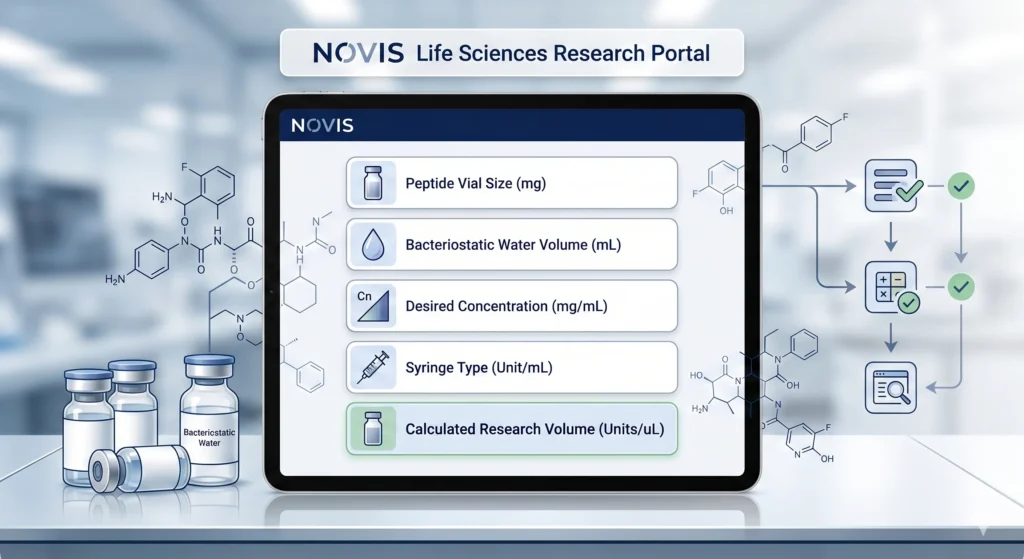
Create a clean, professional biotech news illustration for a blog post about peptide news from May 23 to May 30, 2026. Show a modern digital news dashboard with GLP-1, GIP, and glucagon pathway graphics, clinical trial charts, peptide vials, a regulatory warning document, and a pharmacy coverage icon. Include subtle visual themes of retatrutide demand, tirzepatide access, triple-agonist obesity research, and gray-market peptide safety. Use a polished editorial science aesthetic with white, navy, silver, soft blue, and subtle green tones. No people, no syringes entering skin, no brand logos, no dosage numbers, no exaggerated weight-loss imagery, and no medical claims.
Alt Text
Biotech news illustration showing GLP-1 pathway graphics, clinical trial charts, peptide vials, regulatory documents, and pharmacy coverage icons representing peptide news from May 23 to May 30, 2026.